
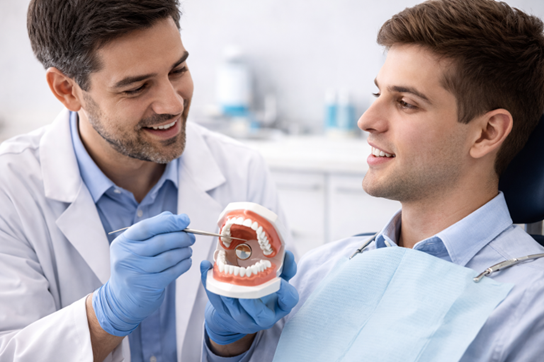
Wisdom tooth extraction is a common dental procedure used to remove third molars that may cause pain, crowding, or infection. Not all wisdom teeth need to be removed, but when they become impacted or difficult to clean, extraction may help prevent future complications. The procedure is typically performed under local anesthesia or sedation, and recovery usually takes a few days with proper aftercare. A thorough evaluation is essential to determine the right timing and approach for each patient.
Introduction
Wisdom teeth are the last set of molars to develop, usually appearing in the late teens or early twenties. Some individuals, they come in without causing any noticeable problems. For others, they can lead to discomfort, crowding, or complications that affect overall oral health.
In our practice, we often meet patients who are unsure whether their wisdom teeth need to be removed. Some may be experiencing mild symptoms, while others may have been advised to consider extraction after a routine exam. Understanding when wisdom tooth extraction is necessary and what the process involves can help you feel more confident about your next steps.
What Are Wisdom Teeth and Why Do They Cause Problems?
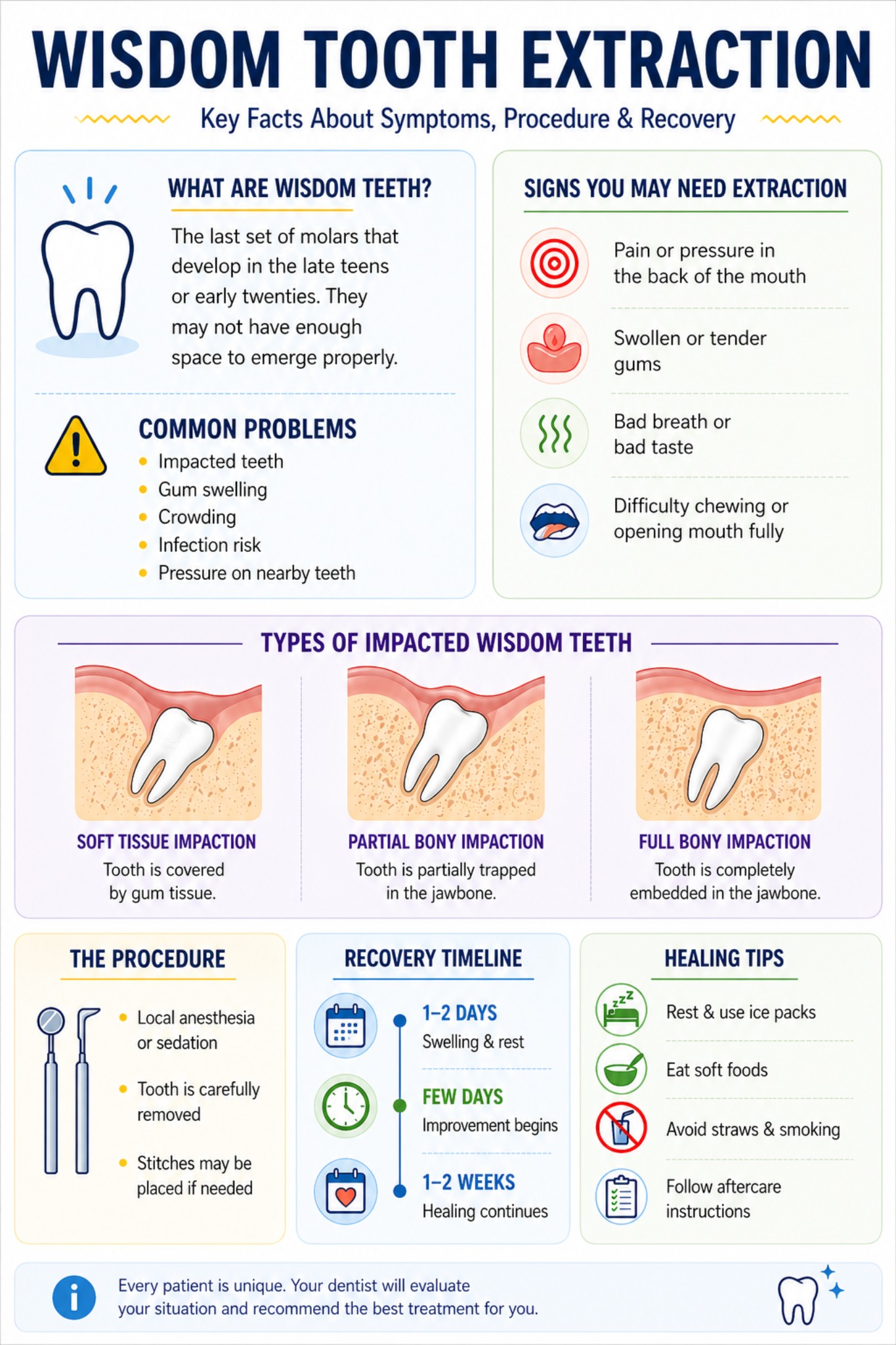
Wisdom teeth, also known as third molars, are located at the very back of your mouth. They are the final teeth to erupt, and because they arrive later than other teeth, there may not always be enough space for them to grow properly. When there isn’t enough room, several issues can arise. The teeth may become impacted, meaning they are trapped beneath the gums or jawbone. In other cases, they may only partially emerge, creating areas that are difficult to clean.
This can lead to:
- Increased risk of infection
- Inflammation of the surrounding gums
- Pressure on adjacent teeth
- Difficulty maintaining proper oral hygiene
We often explain to patients that even if wisdom teeth are not currently causing pain, their position can still affect long-term oral health.
When Wisdom Tooth Extraction May Be Recommended
Not all wisdom teeth require removal. In some cases, they grow in fully, are properly aligned, and can be cleaned just like other teeth. However, we may recommend wisdom tooth extraction when certain conditions are present. These include situations where the teeth are impacted, causing discomfort or increasing the risk of infection.
Other common reasons for extraction include:
- Repeated gum irritation or swelling
- Decay in hard-to-reach areas
- Damage to neighboring teeth
- Cysts or changes visible on imaging
Our goal is always to evaluate each patient individually and recommend treatment based on their specific requirements.
Signs You May Need a Wisdom Tooth Extraction
In some cases, symptoms can signal that your wisdom teeth are causing problems. These symptoms may develop gradually or appear suddenly.
Common signs include:
- Pain or pressure in the back of the mouth
- Swelling or tenderness in the gums
- Difficulty chewing or opening your mouth fully
- Persistent bad breath
- A bad taste that doesn’t go away
It’s important to note that some impacted teeth may not cause obvious symptoms right away. That’s why regular dental checkups and imaging are important for early detection.
What Happens During a Wisdom Tooth Extraction Procedure
The process of wisdom tooth extraction can vary depending on the position and condition of the tooth.
For a fully erupted tooth, the procedure may be relatively straightforward. For impacted teeth, a more detailed surgical approach may be required.
Typically, the procedure involves:
- Numbing the area with local anesthesia
- Offering sedation options for added comfort
- Carefully loosening and removing the tooth
- Placing stitches if necessary
Throughout the process, our focus is on patient comfort and ensuring the procedure is performed safely.
Understanding Impacted Wisdom Teeth
Impacted wisdom teeth are one of the most common reasons patients need extraction. These teeth do not have enough space to erupt properly and may remain partially or fully trapped.
There are different types of impaction:
- Soft tissue impaction, where the tooth is covered by gum tissue
- Partial bony impaction, where part of the tooth is within the jawbone
- Full bony impaction, where the tooth is completely embedded
The position of the tooth can affect both the symptoms and the complexity of the extraction. That’s why imaging, such as X-rays, is essential for proper evaluation.
Why Early Evaluation Matters
One of the most important aspects of managing wisdom teeth is timing. Evaluating the teeth before they cause significant problems can make treatment more predictable.
In younger patients, the roots may not be fully developed, and the surrounding bone may be less dense. This can sometimes make the extraction process more straightforward and recovery more manageable.
Delaying treatment may lead to:
- Increased discomfort
- Higher risk of infection
- More complex procedures
We often encourage patients to have their wisdom teeth evaluated even if they are not currently experiencing symptoms.
Recovery After Wisdom Tooth Extraction
Recovery is an important part of the overall experience. Most patients begin to feel better within a few days, although complete healing may take a couple of weeks.
After a wisdom tooth extraction, it’s normal to experience:
- Mild swelling
- Temporary discomfort
- Slight bleeding during the first 24 hours
These symptoms typically improve with proper care and following post-procedure instructions.
Tips for a Smooth Healing Process
Taking care of the extraction site is essential for proper healing.
We usually recommend:
- Resting for the first 24–48 hours
- Applying cold compresses to reduce swelling
- Eating soft foods such as yogurt, soup, or mashed foods
- Avoiding smoking and drinking through straws
- Keeping the area clean without disturbing the healing site
These steps help reduce the risk of complications and support a smoother recovery.

Risks and Complications After Wisdom Tooth Extraction
Wisdom tooth extraction is a commonly performed procedure, but it’s still important to understand potential risks.
These may include:
- Dry socket, which occurs when the blood clot is dislodged
- Prolonged swelling or discomfort
- Infection in the extraction site
We provide detailed aftercare instructions and are always available if patients have concerns during recovery.
Is Wisdom Tooth Extraction Always Necessary?
Not every patient will need their wisdom teeth removed. If the teeth are healthy, fully erupted, and easy to maintain, they may simply be monitored over time.
Regular dental visits allow us to:
- Track changes in positioning
- Identify early signs of problems
- Recommend treatment if conditions change
The decision to proceed with wisdom tooth extraction is always based on a careful evaluation of risks and benefits.
Schedule a Consultation for Wisdom Tooth Evaluation
If you’re experiencing discomfort or have questions about your wisdom teeth, a professional evaluation is the best place to start.
Our team at CRIOS takes a careful and patient-focused approach to wisdom tooth extraction. We’ll assess your situation, explain your options, and help you decide what supports your long-term oral health.
Frequently Asked Questions
Does wisdom tooth extraction hurt?
The procedure is performed under anesthesia, so you should not feel pain during the extraction.
How long does recovery take?
Most patients recover within a few days, while complete healing may take a few weeks.
Can I go back to work after the procedure?
Many patients return to normal activities within one to two days.
What should I eat after extraction?
Soft foods are recommended during the initial recovery period.
Are there alternatives to extraction?
If the teeth are healthy and properly positioned, monitoring may be sufficient.
Glossary
Wisdom Teeth
The third set of molars is located at the back of the mouth.
Impaction
A condition where a tooth is unable to fully emerge through the gums.
Dry Socket
A condition that occurs when the blood clot at the extraction site is disturbed.
Sedation Dentistry
The use of medication to help patients relax during procedures.
Oral Surgery
A procedure involving the surgical treatment of teeth, gums, or jaw.