Quick Summary:
A bone graft is often an important step in preparing the jaw for dental implants and supporting long-term oral health. While every patient heals at a different pace, understanding the bone graft healing time and knowing what to expect after surgery can help you feel more confident throughout recovery. By following your post-operative instructions, maintaining good oral hygiene, and attending follow-up appointments, you can support proper healing and create a strong foundation for future treatment.
What to Expect During Bone Graft Recovery
If you’ve recently undergone a bone graft procedure or are preparing for one, it’s natural to have questions about recovery. One of the most common concerns patients have is how long healing will take and what they can expect during the process.
Bone grafting is commonly performed to rebuild or strengthen areas of the jaw that have experienced bone loss. In many cases, it plays an important role in preparing patients for dental implants and other restorative procedures. At Coulee Region Implant & Oral Surgery Center (CRIOS), our team carefully evaluates each patient’s oral health and develops a personalized treatment plan designed to support successful healing and long-term results.
What Is a Bone Graft and Why Is It Needed?
A bone graft is a surgical procedure that adds or regenerates bone in areas where bone volume has been lost. Bone loss can occur for several reasons, including missing teeth, periodontal disease, trauma, or long-term tooth loss.
Bone grafting helps create a stronger foundation for future dental treatment and can improve the long-term stability of dental implants. Healthy bone structure is an important part of maintaining overall oral health and supporting restorative procedures.
Understanding Bone Graft Healing Time
One of the most common questions patients ask is how long bone graft healing time will take.
While every patient heals differently, initial healing typically occurs within the first few weeks after surgery. However, the complete integration and maturation of the grafted bone often takes several months. Factors that may influence healing include:
- The size and location of the graft
- Overall oral health
- Age and general health
- Smoking habits
- Compliance with post-operative instructions
- The type of bone graft procedure performed
Because every case is unique, your surgeon will monitor your healing progress and determine when additional treatment can safely move forward.
What to Expect During the First 24 to 72 Hours
The first few days after surgery are typically focused on protecting the surgical site and managing normal post-operative symptoms.
Patients may experience:
- Mild swelling
- Minor bleeding or oozing
- Tenderness around the surgical area
- Temporary discomfort
- Mild bruising
These symptoms are generally expected and often improve gradually during the first several days following treatment.
Tips for Early Recovery
To support healing during the initial recovery period:
- Follow all post-operative instructions carefully
- Take medications as directed
- Rest and avoid strenuous activity
- Use cold compresses if recommended
- Avoid disturbing the surgical site
Following your surgeon’s recommendations can help promote a more comfortable recovery.
How to Support Bone Graft Healing After Surgery
Proper aftercare plays an important role in the success of a bone graft procedure.
Maintain Good Oral Hygiene
Keeping your mouth clean helps reduce the risk of complications while supporting healthy healing. Follow your surgeon’s instructions regarding brushing, rinsing, and caring for the surgical area.
Follow Dietary Recommendations
Many patients are advised to eat softer foods during the early stages of recovery. Avoiding hard, crunchy, or excessively hot foods can help protect the surgical site while healing progresses.
Avoid Tobacco Products
Smoking and tobacco use can interfere with healing and may affect the success of bone grafting procedures. Patients are often encouraged to avoid tobacco products during recovery.
Attend Follow-Up Appointments
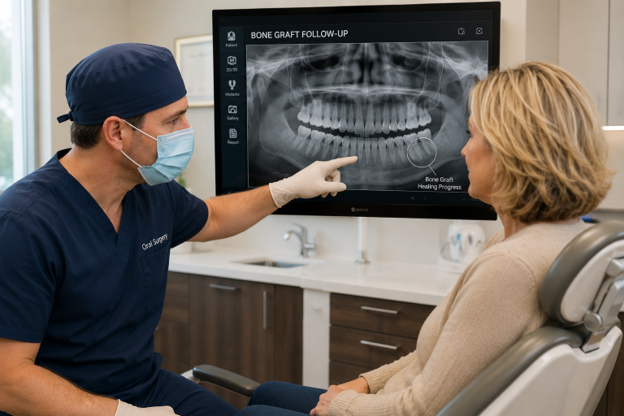
Regular follow-up visits allow your surgeon to monitor healing and ensure the graft is integrating properly with the surrounding bone.
Factors That Can Affect Bone Graft Recovery
Several factors can influence how quickly and successfully a patient heals.
Existing Oral Health Conditions
Conditions such as gum disease or untreated dental infections may affect recovery if not addressed before treatment.
Overall Health and Wellness
Medical conditions, medications, and lifestyle habits can all play a role in healing outcomes.
Surgical Complexity
Larger grafts or more advanced procedures may require additional healing time compared to smaller grafting procedures.
Signs Your Recovery Is Progressing Normally
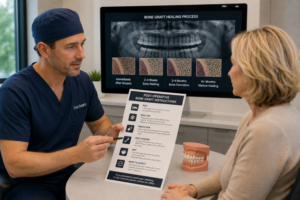
Every patient’s healing experience is unique, but there are several positive signs that recovery is moving in the right direction.
These may include:
- Gradually decreasing swelling
- Reduced discomfort over time
- Healthy gum tissue appearance
- Improved comfort while eating and speaking
- Stable healing at follow-up visits
Your surgeon will evaluate your progress during post-operative appointments and provide guidance based on your individual healing process.
When to Contact Your Oral Surgeon
While some discomfort and swelling are expected, patients should contact their oral surgeon if they experience:
- Persistent or worsening pain
- Excessive bleeding
- Signs of infection
- Significant swelling that does not improve
- Concerns about the surgical site
Prompt communication allows your surgical team to address concerns and provide appropriate care when needed.
How Bone Grafting Supports Future Dental Implant Success
Bone grafting often plays an important role in preparing patients for dental implants. A strong and healthy jawbone provides the support necessary for long-term implant stability and function. At CRIOS, our oral surgeons perform a variety of bone grafting and dental implant procedures designed to help patients restore their oral health and smile with confidence. Our team carefully evaluates bone structure, gum health, and overall treatment goals to develop personalized treatment plans for each patient.
Schedule a Consultation to Learn More About Bone Grafting
If you’ve been told you may need a bone graft before dental implant treatment, our team is here to help. At Coulee Region Implant & Oral Surgery Center, we provide personalized treatment planning and advanced surgical care to help patients rebuild healthy bone structure and prepare for successful long-term outcomes.
Schedule a consultation with our team to learn more about bone grafting, recovery expectations, and the next steps in your treatment journey.
Frequently Asked Questions
How long is the average bone graft healing time?
Healing varies from patient to patient. While initial healing may occur within a few weeks, complete bone integration often takes several months.
Is swelling normal after a bone graft?
Yes. Mild swelling is a common part of the healing process and generally improves during the first several days after surgery.
Can I eat normally after a bone graft?
Patients are often advised to follow a soft-food diet during the early stages of recovery. Your surgeon will provide specific dietary recommendations.
Will I need a bone graft before dental implants?
Not every patient requires bone grafting. The need for a graft depends on the amount of available bone and the requirements of the planned implant treatment.
How can I support faster healing after a bone graft?
Following post-operative instructions, maintaining good oral hygiene, avoiding tobacco use, and attending follow-up appointments can all support healthy healing.
Glossary
Bone Graft
A surgical procedure that adds or regenerates bone in areas where bone volume has been lost.
Bone Graft Healing Time
The period required for grafted bone to integrate with existing bone and heal properly.
Jawbone
The bone structure that supports teeth and dental implants.
Osseointegration
The process through which bone bonds with a dental implant or graft material.
Oral Surgeon
A dental specialist trained to perform surgical procedures involving the mouth, jaw, and facial structures.
Bone Loss
A reduction in jawbone volume that may occur due to missing teeth, gum disease, or trauma.
Surgical Site
The area where a surgical procedure has been performed, and healing takes place.
Dental Restoration
A replacement tooth or prosthetic used to restore function and appearance.